
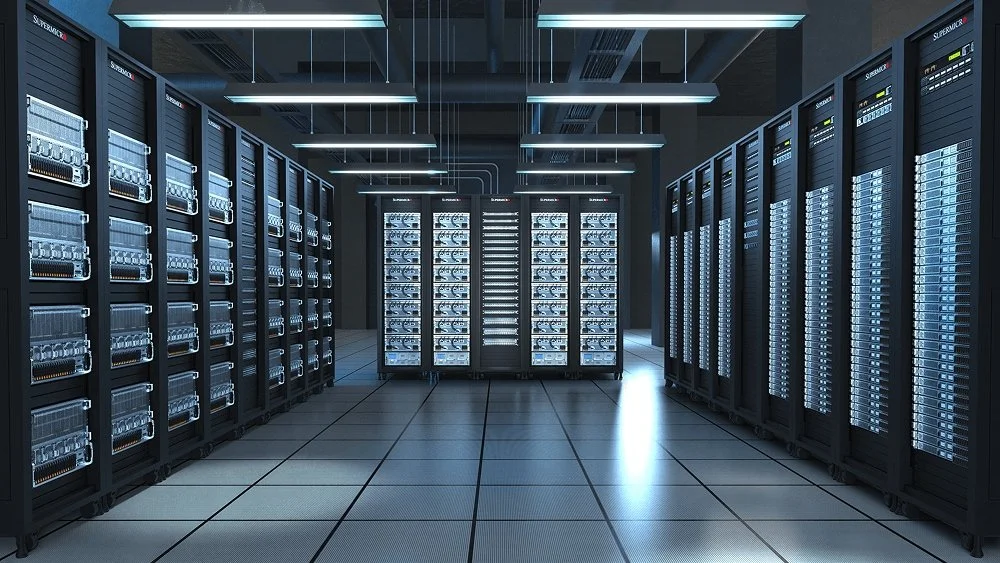
The artificial intelligence revolution isn't just transforming software — it's triggering one of the largest physical infrastructure buildouts in modern history. Behind every chatbot response, AI-generated image, and autonomous agent decision lies a vast network of data centers consuming enormous amounts of electricity. The numbers are staggering, and they're only going to grow.
The Insatiable Appetite for Compute
At the heart of the AI boom is a simple, relentless requirement: compute. Training large language models and running inference at scale demands specialized hardware — GPUs, TPUs, and custom AI accelerators — operating continuously at maximum load. Unlike traditional software workloads, which are bursty and variable, AI inference is constant and intense. Every query to ChatGPT, Claude, Gemini, or Grok draws on banks of chips running 24 hours a day, seven days a week.
This demand is translating directly into capital investment at a pace the tech industry has never seen before. In 2024, Amazon, Microsoft, Google, and Meta collectively spent over $200 billion on capital expenditures — a 62% year-over-year increase from 2023, with each firm hitting an all-time high. And the spending isn't slowing down. The capital expenditure of five large technology companies surged to more than $400 billion in 2025 and is set to increase by a further 75% in 2026.
These billions are being poured into a new generation of AI-optimized data centers — facilities built from the ground up with denser power racks, advanced liquid cooling systems, and direct connections to high-capacity power infrastructure.
Data Centers: The Physical Engine of AI
A modern AI data center is fundamentally different from its predecessors. Traditional enterprise data centers were designed around power densities of a few kilowatts per rack. Today's AI facilities demand rack densities many times higher, creating intense cooling and power delivery challenges that require entirely new engineering approaches.
Electricity consumption from data centers currently amounts to around 415 terawatt hours (TWh), or about 1.5% of global electricity consumption in 2024, and has grown at 12% per year over the last five years. But AI is now supercharging that trajectory. Gartner analysts estimate worldwide data center electricity consumption will rise from 448 TWh in 2025 to 980 TWh by 2030. AI-optimized servers alone are projected to represent 21% of total data center power usage in 2025 and 44% by 2030. The geographic concentration of this growth matters too. In 2023, data centers consumed about 26% of the total electricity supply in Virginia, and significant shares in North Dakota (15%), Nebraska (12%), Iowa (11%), and Oregon (11%). These aren't marginal additions to local power grids — they are transformative loads reshaping entire regional energy systems.
The Power Grid Crisis
Here is where the AI infrastructure story becomes a genuine systemic challenge. The electric grids powering these facilities were largely built in the mid-20th century, designed for a world that looked nothing like today's compute-intensive economy.
As AI workloads scale from pilots to production, electricity demand is rising faster than the U.S. power grid — much of it built decades ago — was designed to handle. Approximately 70% of the grid is approaching the end of its life cycle, and unprecedented load growth is exposing its aging nature.
The result is a system under severe strain. Permitting delays, supply chain bottlenecks for transformers and transmission equipment, and years-long interconnection queues are all slowing the grid's ability to respond. Data center supply has been constrained over the past 18 months, largely due to the inability of utilities to expand transmission capacity because of permitting delays, supply chain bottlenecks, and infrastructure that is both costly and time-intensive to upgrade.
This bottleneck is having real consequences. In regions where capacity is insufficient, data center developers are being forced to delay projects, contract power directly from private producers, or install on-site natural gas generation as a stopgap measure.
The Energy Mix: Renewables, Nuclear, and Gas
The scale of power demand is forcing the tech industry into a new role: energy market participant. Tech companies have become the dominant buyers of renewable energy through power purchase agreements. The AI sector accounted for around 40% of all corporate power purchase agreements for renewables signed in 2025, and is now a major source of momentum for the nuclear and advanced geothermal industries.
Nuclear power, long stagnant in the West, is experiencing a renaissance driven almost entirely by data center demand. The pipeline of conditional offtake agreements between data center operators and small modular reactor (SMR) nuclear projects has grown from 25 gigawatts at the end of 2024 to 45 gigawatts today. Plans are already underway to revive shuttered nuclear plants, with deals struck to restart facilities like Three Mile Island in Pennsylvania to feed power-hungry data center campuses.
Despite the green ambitions, natural gas isn't going away anytime soon. Natural gas is projected to continue supplying the largest share of energy at data centers through 2030. The reliability requirements of AI workloads — which cannot tolerate power interruptions — make dispatchable fossil fuel generation a pragmatic bridge while cleaner alternatives scale.
The Investment Opportunity
For investors, the AI infrastructure buildout represents one of the most compelling multi-year capital deployment themes in a generation. The demand signal is clear, durable, and backed by the balance sheets of the world's largest companies.
Goldman Sachs Research forecasts global power demand from data centers will increase 50% by 2027 and by as much as 165% by the end of the decade compared with 2023. That growth creates opportunities across the entire value chain: data center REITs and developers, power generation companies, grid infrastructure providers, cooling technology firms, and the semiconductor companies whose chips sit at the center of it all.
The cost implications for society, however, deserve attention. One study from Carnegie Mellon University estimates that data centers and cryptocurrency mining could lead to an 8% increase in the average U.S. electricity bill by 2030, potentially exceeding 25% in the highest-demand markets of central and northern Virginia. Policymakers, utilities, and the tech industry will need to work together to ensure that the benefits of the AI buildout don't come entirely at the expense of ordinary ratepayers.
The Bottom Line
The AI infrastructure story is ultimately a story about physical reality catching up with digital ambition. Every model, every agent, every AI-powered product requires steel, silicon, copper wire, and megawatts. The companies — and investors — who understand this deepest layer of the stack are best positioned to capitalize on what may be the most significant infrastructure cycle of the 21st century.
The grid is being rewired. The only question is how fast.